
What is a Critical Digital Asset (CDA) in Nuclear Cybersecurity

Overview
A Critical Digital Asset (CDA) is a digital system, device, or component that performs or supports functions important to safety, security, or emergency preparedness in a nuclear power plant.
Under Nuclear Energy Institute guidance such as NEI 08-09, CDAs are the foundation of a plant’s cybersecurity program. Identifying and protecting CDAs ensures that critical operations remain secure from cyber threats.
Why CDAs Matter
What Qualifies as a CDA
How CDAs Are Identified
Challenges in Managing CDAs
Best Practices
Why CDAs Matter
CDAs are central to nuclear cybersecurity because they:
- Support systems that protect reactor safety and plant operations
- Enable physical security and access control systems
- Support emergency preparedness and response functions
- Represent the systems that must meet strict regulatory controls
Failure to properly identify and manage CDAs can result in:
- Compliance gaps
- Increased cyber risk exposure
- Challenges during regulatory inspections
What Qualifies as a CDA
A digital asset is typically classified as a CDA if it:
- Performs a critical function directly
- Supports a system that performs a critical function
- Can impact safety, security, or emergency preparedness if compromised
Examples include:
- Control system components (PLCs, HMIs)
- Security system servers and monitoring tools
- Network devices supporting critical communication
- Systems involved in emergency response workflows
How CDAs Are Identified
CDA identification is a structured process
- Step 1: Identify Critical Functions
- Determine which plant functions impact safety, security, or emergency preparedness
- Step 2: Map Supporting Systems
- Identify systems and subsystems that support those functions
- Step 3: Identify Digital Assets
- List devices and software components within those systems
- Step 4: Apply CDA Criteria
- Evaluate whether each asset meets CDA classification criteria
Challenges in Managing CDAs
Organizations commonly face:
- Large and complex asset inventories
- Manual tracking using spreadsheets
- Inconsistent classification across teams
- Difficulty maintaining updates over time
- Audit preparation challenges
Best Practices
Recommended practices include:
- Maintain a centralized inventory of CDAs
- Use consistent classification criteria
- Track relationships between systems and assets
- Keep documentation continuously updated
- Align with regulatory guidance and internal policies
How Cyberwiz-Pro Helps
Cyberwiz-Pro is an enterprise platform for centrally managing all aspects of CDA and vulnerability assessments and supporting regulatory audits.
- Providing a centralized system of record
- Enabling structured classification workflows
- Maintaining relationships between assets and systems
- Tracking changes over time
- Generating audit-ready documentation
FAQ
A digital asset becomes a CDA only if it supports or impacts critical functions related to safety, security, or emergency preparedness.
No. Only those that meet CDA criteria based on their role and impact are classified as CDAs.
Continuously, especially when systems are modified or new assets are introduced.
How to Perform a NEI 08-09 CDA Assessment

Overview
A NEI 08-09 CDA assessment is a structured process used to identify, classify, and protect digital assets that support critical functions in nuclear power plants.
This process ensures that cybersecurity controls are applied to systems that matter most.
Objectives of the Assessment
- Identify Critical Digital Assets (CDAs)
- Apply appropriate cybersecurity controls
- Maintain compliance with regulatory requirements
- Ensure audit readiness
- Monitor the program with vulnerability assessment
Step-by-Step Process
Step 1: Identify Critical Functions
Determine plant functions that impact:
- Safety
- Security
- Emergency preparedness
Determine plant functions that impact:
- Safety
- Security
- Emergency preparedness
Step 2: Identify Systems Supporting Those Functions
Map systems and subsystems that enable these functions
Step 3: Identify Digital Assets
List all devices and software within those systems
Step 4: Classify CDAs
Apply NEI 08-09 criteria to determine which assets qualify as CDAs
Step 5: Assign Security Controls
Map required cybersecurity controls to each CDA
Step 6: Document Results
Maintain detailed records for:
- Asset classification
- Control implementation
- System relationships
Maintain detailed records for:
- Asset classification
- Control implementation
- System relationships
Step 7: Maintain and Update
Continuously update the assessment as systems evolve
Common Challenges
- Time-consuming manual processes
- Inconsistent classification decisions
- Difficulty tracking changes
- Maintaining audit-ready documentation
Best Practices
- Standardize classification methodology
- Use structured workflows instead of spreadsheets
- Maintain traceability between systems and assets
- Automate documentation where possible
- Prepare continuously for audits
How Cyberwiz-Pro Supports NEI 08-09 Assessments
Cyberwiz-Pro enables:
- Structured CDA identification workflows
- Automated classification and tracking
- Mapping of controls to regulatory requirements
- Centralized documentation
- Audit-ready reporting
FAQ
It is widely used as industry guidance for nuclear cybersecurity programs and aligns with regulatory expectations.
It depends on plant size and complexity but can take significant time if done manually.
Whenever system changes occur or during periodic reviews.
Air-Gapped Vulnerability Management Explained
Overview
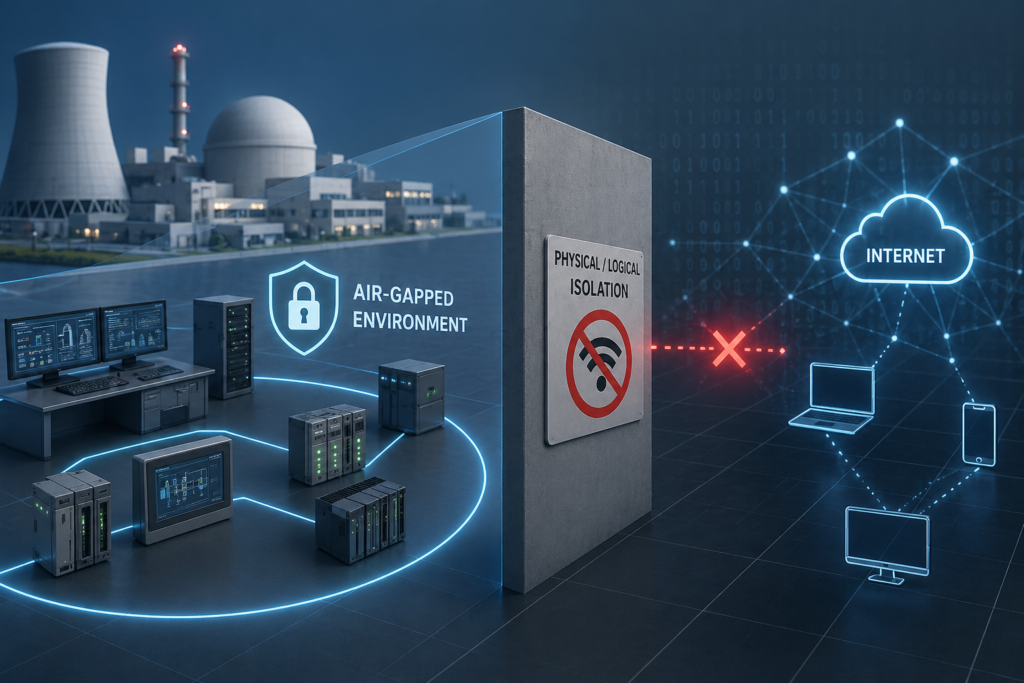
Air-gapped environments are networks that are physically or logically isolated from external internet access. These environments are common in nuclear power plants and other critical infrastructure systems.
Vulnerability management in such environments requires specialized approaches due to the lack of connectivity.
Why Air-Gapped Systems Exist
Air-gapped systems are used to:
- Reduce exposure to external cyber threats
- Protect critical operational systems
- Meet regulatory and security requirements
What is Vulnerability Management in Air-Gapped Systems
It is the process of:
- Identifying vulnerabilities in systems
- Assessing risk
- Prioritizing remediation
- Tracking corrective actions
—all without direct internet connectivity.
Key Challenges
Limited Access to Vulnerability Data
Manual Data Transfer
Limited Patching Options
Lack of Centralized Tracking
Limited Access to Vulnerability Data
No direct connection to external vulnerability databases
Manual Data Transfer
Updates often require controlled import of data via secure methods
Limited Patching Options
Systems cannot always be patched immediately due to operational constraints
Lack of Centralized Tracking
Many organizations rely on spreadsheets or fragmented tools
How the Process Typically Works
Step 1: Import Vulnerability Data
Data is imported through secure, controlled processes
Step 2: Assess Systems
Systems are evaluated against known vulnerabilities
Step 3: Prioritize Risks
Vulnerabilities are ranked based on impact and criticality
Step 4: Plan Remediation
Actions are defined based on operational constraints
Step 5: Track and Document
All actions are tracked for compliance and audit purposes
Limitations of Traditional Tools
Most conventional tools:
- Require internet connectivity
- Depend on cloud-based updates
- Do not support offline workflows
Best Practices
- Maintain a controlled data import process
- Prioritize based on operational risk
- Track vulnerabilities centrally
- Align remediation with plant schedules
- Maintain documentation for audits
How Cyberwiz-Pro Supports NEI 08-09 Assessments
Cyberwiz-Pro is designed for air-gapped environments and provides:
- Offline vulnerability tracking
- Secure data import capabilities
- Centralized visibility across systems
- Structured remediation tracking
- Audit-ready reporting
FAQ
Yes, with proper processes and tools designed for offline environments.
Through controlled import of external data sources.
Air-gapped environments restrict external connectivity for security reasons.